
Bersiap: The Bloody Independence War After WWII – Part 10

An eye-witness account by Gerrit Vermeulen, a young Dutch soldier from Renswoude
In his own words:

Gendang Tambak, 28 July, 1946 – Continued

Along the road are low embankments which provide cover for us as we open deadly fire at the enemy. Immediately several of them quickly disappear behind the hilltop ahead of us. We also see one man tumble and fall and lie still. He lies pretty close by. Now we don’t see anyone anymore. But there, there! A few of them jump up and try to reach the hilltop up ahead. But there is no escaping for them any more. Immediately we open fire with brens, stens and guns, and they fall down. This is repeated a couple of times and then nothing. Five or six of our men dash forward to see if there are any enemies left behind the hilltop. But there are none, and on the way back they count the dead bodies and take their weapons. About a kilometer up ahead another part of our patrol is still in heavy combat. But we relax, light a cigarette, drink something and wipe our sweaty faces, while closely looking around. One of us got a bullet through his leg but he can still walk. Slowly, the firing diminishes, until only a single shot in the distance disturbs the silence. We are master of the terrain. The enemy is completely defeated.

We start heading home. With great caution still, because the enemy may still be hiding somewhere. Far behind us we hear several more shots, but they can’t harm us. The majority of the patrol takes the road and others go through the forest to provide side cover. But all remains quiet. We get home at 10:30 a.m. after eight heavy hours. The booty consists of 16 guns, 2 heavy machine guns, about 10 grenades and a nice pile of ammo. We guess the number of enemy casualties to be 50, of which 32 dead: a hefty loss for the extremists in men and weapons. Apparently they thought that we would be intimidated again by loud gunfire. They must have been totally surprised by our offensive. There is no telling of how strong the enemy is, but they sure exceed our troops in numbers.  We have 13 prisoners, five men, three women, a child of 4 or 5, two babies of 6 and 2 months, and two goats. I don’t really know if they are prisoners or liberated evacuees, but extremists they are not.

However, even though this fight was successful for us, I hope they will soon reach a cease-fire, so that we won’t have to shoot at our fellow human beings any more, our fellow citizens really, (even though they are straying citizens). We count one Japanese among the dead, but I know there were more of them. In the afternoon I go into town for a little while on the bike. That is the life of a soldier on the front line: a deadly fight in the morning and a bike ride in the afternoon.

Most of our men go to bed around 7:00 p.m. We get up again at 1:30 a.m. for a long, hard day on patrol. Not in the mountains this time, but on level terrain: along a jungle path, through a field and a kampong, in between fish ponds, across a small kali, then crossing a large kali. This river has a ferry, and we can get across in a rowboat. On the other side we find a kampong, where we rest for a while and talk to the people. When we leave none of us has any cigarettes left. We get home at 9:30. That has been the last patrol for us for a while.

29 July, 1946

Today we are moving again. We have to watch a bridge in an occupied kampong with friendly, helpful people. Nothing dangerous happens.

Kalianak, 1 August 1946

Reflecting on the heavy battle we fought against the extremists, I think they are just a bunch of young men in their twenties, armed and instigated by the Japanese and by each other, led by a few of the Japs. They realize that they are no match for a real army and try to lure us into ambushes and attempt nocturnal attacks. But when it comes down to a real battle, their fate is a fast retreat or destruction. In the mean time, they make our lives stressful.

In the afternoon we get a telephone order that Ab de Bruin and I will have to join the patrol tomorrow. It will be a very large patrol with several men from each post and also one or two platoons stationed in town.

Kalianak, 5 August 1946

They pick us up at 5 p.m. but it is already dark when we arrive. In the dark we find an empty hut, hoist our klamboes and go to sleep, because we have to get up again at 3:00. Extremists disturb our sleep by shooting at our camp a few times but they don’t cause any damage.

Friday morning. Usually we are among the first, but today among the last, designated to protect the First Aid post, a little behind the front. I am ordered to carry the injured, a stretcher on my shoulders. We stay behind in a kampong until, at the break of dawn, the shooting starts: confrontation with the enemy. Now it is silent again, then it starts again, from various directions. When the enemy keeps shooting from one spot, we use artillery fire and sometimes mortar fire. We clearly discern our guns and brens as well as the enemy carbines and machine guns. The battles last more than three hours. We have nothing else to do than keep an eye on the vicinity. Kind of boring after a while, sometimes it is better to join the fight.

Finally we get the message: We will be coming back. The enemy fires another few mortar grenades, a little too close for comfort, I think. It still takes quite a while before our men get back. The enemy has several casualties, we have none. We have four prisoners: three natives and one critically injured. I have to help carry the injured man. The booty consists of two guns and the bottom part of a heavy machine gun.

On Saturday I have to do kitchen chores. Wash, polish, clean up, take out the trash in the truck, make sandwiches and so on. We get shot at for a while longer. Bullets fly over and around the kitchen, hitting the ground. But as usual, nobody gets hit. I work until six and then have to get up twice in the night to stand guard.
Stay tuned!

Happy Thanksgiving to all of you, my dear friends. I’m going to be celebrating with my family and will return with the story of Gerrit Vermeulen two weeks from now.

Ronny
Bersiap: The Bloody Independence War After WWII – Part 9

An eye-witness account by Gerrit Vermeulen, a young Dutch soldier from Renswoude
In his own words:

Gedangan, 1 July 1946

At 7:00 a.m. during roll call the Captain says: “Hey guys, we are at the front, and the necessary work has not been completed. So hurry up, for your own safety.”

I get 7 coolies, all different ones than yesterday. One of the coolies jumps into the air, reaches down into the water and grabs a huge turtle, which had bitten him in his foot. Yesterday he caught a kodok besar (large frog), which he took home to eat. Frogs here are twice the size as in the Netherlands. The ditch finally gets done.

Next, we have to clear the terrain, clean trashcans and fabricate lids for them, and dig a hole for empty cans waste. Outside the kitchen is already a large pile of empty cans. But when the coolies go home at 3:00 p.m., all the empty cans go with them. They can re-use them for all kinds of purposes.

This afternoon I get the order to pack up and move again. Quickly I get ready and jump on the first available car. The road is full of potholes – thank goodness it’s only 6 kilometers to the next post: a small railway station with two small buildings for us to use. Kampong Gendangan lies about 500 yards from the tracks.

Gedangan, 2 July 1946

Part of my platoon arrived here yesterday. I get 12 coolies for my work and two of our own boys, who have to cut down the tall alang-alang (hard, tough grass). I have to clean out a well, fill other holes and drains, clean an existing toilet and dig another one, at about 50 yards out, amidst tall grass; a 3-feet deep ditch, which can be closed when it’s full. Tomorrow we’re going on patrol – a heavy day ahead.

Gendang Tambak, 28 July, 1946

Last Thursday they showed a movie under the stars. Attending was not mandatory, we could go if we wanted and if we were not standing guard. It is still wonderful to sit outside at night. First we saw a trainings film: how to stay healthy, how to treat injuries, how to put broken arms an legs into splints, how the Japanese fight and how we have to fight, and how to best kill people.

A few bursts of bren fire sounded through the silent night. We didn’t care: it was more than 400 yards away. Then we watched a beautiful movie about Javanese life and customs on Java. More shots were heard, about 300 yards away, so across the kali. We thought it safer to sit on the floor rather than a bench or the roof of a car. And the movie continued. Then two brens started rattling and an enemy machine gun shot bullets through the air, without doing damage. The movie stopped and all went dark. Because it was 9 o’clock already we went to our huts and to bed.

It’s Friday, and two cars arrive with soldiers, several nurses, the battalion’s doctor, the battalion’s commander, Major Erne, and a few other officers. We are getting ready for a patrol to Indro tomorrow. The name of that kampong is bringing up bad memories. The marines lost one man whose body they couldn’t even take with them because of the heavy firing. And we ran into an ambush there once. We always run into the enemy in Indro. One of my friends remarks: “I wish I had to stand guard tonight, so I wouldn’t have to go on patrol tomorrow.” And I say, “I wish it was Saturday afternoon already.”

Early Saturday morning the command sounds: “Get up boys, it’s time to get up.” We get up, get dressed, have breakfast and get ready. It’s two o’clock. We leave at 2:30 a.m., a large patrol. A dark moon in the clear night sky, the weather is nice for a night walk. Slowly and carefully we move forward. We do make a lot of noise though: a few hundred yards up ahead one of our carts with two heavy mortars bumps loudly over the uneven road. It’s almost like calling out: “Watch out! Here we come!”

The group gets divided. We have to leave the path and continue into the forest. Before daylight we hear three shots, but so far away that they can’t very well  be meant for us. Take cover, walk on, take cover again. Our patrol forms a line of several hundred yards. Suddenly, loud firing not too far up ahead. It’s most likely part of our patrol connecting with the enemy. We move ahead again until we hear shots close by. We take cover behind palm trees and low embankments but we don’t see anything. Will it be just like other times? Fire back when we get fired on, if necessary with grenades. The army commanders don’t take any risks with their men. But it feels like the extremists are mocking us: they fire a little, then pull back a little; at night they circle our camp to scare us.

Anyway, we move forward again, take cover again. Enemy fire rattles straight ahead and close by, but because of the dense undergrowth and the hilly terrain we can’t see a thing. Suddenly enemy war cries erupt in front of us: “Madjoeoeoeoe Merdèkaaaaa”. It’s what they shout when they attack (Move ahead, Attack, for Freedom).

The lieutenant commands: “Raise the bayonets! Don’t pull back! Fire when you see them! Fire to kill and string them on your bayonets! Do not hesitate! Hold on!” One minute passes. We are tense. It’s kill or cure. Is there a large or small number out there? Will we get many of them against us? Another commando from the lieutenant: “Forward, hold on! String them on your bayonets!” Screaming loudly we jump up and run forward, across the open terrain, into the dense undergrowth, across open terrain again, then take cover again. We don’t see the enemy but the shots keep being fired and bullets fly over our heads. We don’t think of the danger, we are not afraid. Again “Forward!” sounds the commando, and again we cross open terrain, run through the bush, across open terrain again and through a palm jungle until we reach the road. And there, we suddenly see the enemy, running ahead of us, crawling, hiding behind embankments…

Stay tuned!

I welcome your comments

Ronny

Bersiap: The Bloody Independence War after WW II – Part 8

An eye-witness account by Gerrit Vermeulen, a young Dutch soldier from Renswoude
In his own words:

Soerabaja, 12 June 1946

It has been quite a while since I wrote something, but nothing much is happening. So let me tell you about my little “Javanese girl.” We had seen her roaming around, sleeping on a bench in the bus stop, then back on the grounds of the compound. We said to each other, “why don’t we ask her to sleep with us in the waiting room.” We put up a stretcher, add some curtains and other cloths and ask if she wants to sleep there. “Yes,” she says. We guess her to be about 8 – 10 years old. A skinny little girl, she says she has no home, no father, no mother, and happily accepts little treats from the soldiers. She soon finds the kitchen and when I take her to the cook she gets plenty of food, which she devours without fork or spoon. We call her Sarina, after the song (Sarina, the child from the dessa).

We’re packing up and leaving again, but two months later, riding my bike through the other side of town, I see a group of young children with a Catholic nun. And there is our Sarina! She recognizes me too – the nun says her name is Daria. None of us knows where Daria is from, but I am happy that she is in good hands now.

Benowa, 26 June 1946

We’re getting up at 5:45 a.m. At 7:00 the cars for my platoon come by, but they don’t stop! Now what? “Let me take you to the kitchen – we can still catch up” says the cook.
“Toean, sepeda?” (your bike, sir?) asks the djongos.
“Saja, djongos, lekas, lekas”. Yes, quick, quick!
We load everything on top of the kitchen car, and race to the station, where a crazy activity is in full swing. We load sand bags, barbed wire, kitchen stuff and more onto the waiting train, which leaves the station an hour later.

Very slowly, because of the danger of land mines, we go towards our goal. We stop before we get there to give one division of us the opportunity to explore the terrain up ahead. After all, it’s possible that the enemy in large numbers are waiting for us. But all appears to be safe. The train pulls up again and then we arrive in Benowa, a dessa (small town, larger than a kampong), about 20 kilometers from Soerabaja.

The first thing we do is set out posts to prevent unexpected enemy attacks. We pile up sand bags for a wall to hide behind. Two officers, a few men and I walk to the kampong that has been vacated for us. All is safe and we split up among the houses: I choose one together with my two best friends and three others. Then we get to work. First of all we dig a deep trench to use as an emergency toilet: quite a job in the dense clay soil. Then we fortify our hut on its most dangerous side. With wood and soil we create a barrier to protect us somewhat from enemy fire when we lay on the floor inside. The terrain in front of us slopes down, so that it will be more difficult to hit us from below. The six of us hit the sack early that night.

Benowa, 27 June, 1946

Together with a few others I have to build latrines over a small kali (stream), but we first have to clean out that kali in order for the feces to be flushing down. A dirty job, cleaning that sticky clay kali – our progress is slow. We ask the Kepala Kampong and the Loerah (head of the kampong and the district) for 20 coolies, but none show up, and we struggle on until night. One of us has to go to the hospital for an ulcer on his foot. My two friends reinforce our barricade even more; everyone is busy from morning till night, building barbed wire fences, constructing barriers, standing guard, and so on. The cannons have arrived and are put into place. And then we worry: will there be a nighttime attack? There is no electricity here, so we retire early.

Benowa, 28 June, 1946

Roll call at 5:30; breakfast at 6:00; the sick report in at 6:30 and roll call and start of work at 7:00. Lunch from 12:00 to 1:00; roll call at 5:15, then dinner and end of work. This morning at 7:00 the Kepala Kampong arrives with 20 coolies and a little later the Loerah with 80 more. So now we have 80 coolies! When more show up in the course of the day we send them home: we have enough. These coolies are not lower class men, but regular kampong people, thankful for our arrival and help to fight the extremists. They get fl.1 (one guilder) per day. I get 9 men to help me dig a trench. But it is tough work. At first I can’t get the shovel into the clay, then I can’t get it out, and when it is finally out, the thick clay is stuck to the shovel and I can’t get it off! But now watch how the natives are doing it! There is a little water in the ditch. They dig into the soft spots with their bare hands and throw the clay up on the side. The harder spots are treated with their bare feet, shaped into a ball which they throw up on the side with their hands. If it is harder still they use a patjol, (a kind of hoe) to break up the clay and throw the pieces up on the side. It’s too bad I can’t converse with them: they speak Javanese and I get nowhere with my few words of Malay. Two words they know, however: makan (eat) and minoem (drink). And then two other words: Tabeh Toean (goodbye, sir). When they stop work at 3:00 p.m., a nice part of the ditch is finished. Saluting me in their own way, bowing, they say: “Tabeh Toean” and leave for their homes.

Benowa, 29 June, 1946

Nothing special happens today except for a terrible accident. We are strictly forbidden to shoot here. But twice that day I heard a shot. Then again, around 2:30 I think I hear another shot. ‘Darn! Why do they do that,’ I think. Then one of my two best friends comes running in shouting “The doctor! The doctor! They are shooting with the bren!” He is clasping both hands to his bare chest and both his chest and his hands are full of blood. He is passing me on his way to the doctor and I run along with him. I notice a wound on his back as well and conclude he has been shot through his breast. Thank goodness on the right, not in his heart. Two other men run in with another in between them, wounded in his shoulder.

Another soldier appears, calling, “Get the doctor! He is needed more over there!” ‘More casualties?’ I am thinking, while I run with the doctor to the place of the accident and there, on the floor, lies my other best friend: dead. They lift him onto a gurney and carry him away. When all that is finished, I go to my hut, sit down in the darkest corner and cry my heart out. A soldier, I should be ashamed to cry like that, but I can’t help myself. My best friend is dead; my other best friend, wounded.

However, as a soldier in a combat zone, I must stop thinking about that. So I quickly go back to work. One casualty and two heavily injured men because of someone’s carelessness is truly appalling. The three men that were hit were placing barbed wire near one of the barriers when a burst of fire came out of the barrier because of someone’s carelessness!

Stay tuned!

I welcome your Comments

Ronny

Bersiap: The Bloody Independence War after WWII – Part 7

An eye-witness account by Gerrit Vermeulen, a young Dutch soldier from Renswoude
In his own words:

Soerabaja, 27 April 1946

I write Soerabaja, but we are about 12 kilometers outside of the city. I don’t know the name of this kampong.

Today we had the heaviest march yet. Get up at 3:00 a.m., leave at 4:00 and home again around midnight, exhausted but safe, thank God.

30 April 1946

This morning, on our patrol trip, we capture two prisoners. One man of 25 and one of 16 or 17. I don’t think they are enemies though, they are not armed. At first it looks like they didn’t know anything, but slowly but surely we get more information out of them than we could get in ten patrol trips. Now, I don’t know if everything they say is true, but they do know the outcome of our combat last Saturday. The number of enemy casualties they mention is 150, but that sounds too good to be true.

4 May 1946

We thought we were going to leave today, relieved from the front, but that has been postponed for two days. I go swimming in the kali every day around noon, when the (salt) water level is at its highest and cleanest and the tide is turning so there is no current. The kali is 40 to 50 yards wide, and swimming back and forth a few times is easy. It’s not dangerous because there are no crocodiles or sharks. The kali separates us from enemy territory, and once in a while we hear enemy fire, even machine gun fire, but that doesn’t mean that we can’t swim back and forth a few times. When the water rises a lot of snakes appear, but they are not poisonous and just looking for fish in the water. We get enough to eat here, but I often hardly eat anything because I don’t like it. There are enough bananas, oranges and eggs, and those are fine. But we are hoping to get out of here soon.

7 May 1946

Hey, we are back in the same place we left for 16 days. We had only taken the bare minimum of our possessions and now we’re getting everything else back. I am strolling through town for a little while and see a second hand bicycle at a Toekang sepeda priced at fl.50 (guilders). Hm, it looks good, has solid tires, I think I can get it for fl.25. But the guy doesn’t want to budge, even when I offer empat pulu lima (45) and walk away, and I end up having to give him fl.50 in exchange for the bike anyway.

On my way home, riding through a part of town I have never been, I discover a Pasar Besar. I am amazed at the number of natives and Chinese people there, and not a single white person. A huge hall and all the streets around it are filled with rows of small booths selling rice, flour, chickens, eggs, shoes, textiles, fish, fruits, vegetables, candles, and everything else you can find in a regular shop. It is quite different from a market in the Netherlands, let me tell you.

12 May 1946

After only four days in Soerabaja, this Saturday we are moving again. When the car stops at the destination I always jump out to investigate our new quarters. I like to get a spot against one wall or in a corner, so that I can put my barang behind it. It’s wonderful here. We have electric light, water, and even a refrigerator. We don’t need to broom the floor, wash our clothes and sew on buttons any more. We have a baboe who does the laundry and ironing for us and a djongos, who cleans the house. The djongos also makes tea for us. We have to pay our baboe and djongos ourselves: they get 50 cents per day from the twenty of us and they cook meals and serve drinks. A car picks them up in the morning and takes them home in the early afternoon.

It is humid and hot here, and I usually sleep on top of the blanket instead of under it. If there are doors and windows, they are open day and night. It is normal here that when we get up in the morning we put on our sneakers and walk around all day in our thin underwear. I have a nice green one, for 3/4 stitched closed in front, and so we work, sit, row and walk. Easy for the baboe, not a lot of kotor (dirty) clothes.

There are many tjitjaks in our quarters. I can count twenty from where I sit. They are little lizards that walk up and down the walls, catching mosquitoes and other insects, so we leave them alone.

May 23, 1946, Airfield Soerabaja

The bay is wide and clean, we can swim and row to our heart’s content. 20 yards from our quarters are locks where we see hundreds of fish. The boys try to catch some with a net and a fishing pole, but are disappointed in their catch.

Across the bay is enemy territory. About 200 yards from our quarters starts the airport with many large hangars, regular planes and seaplanes. There are also about ten Japanese seaplanes, painted in the colors of the extremists: red and white. But they are not in use.

When we go on patrol we have to be in full combat uniform, gun and ammunition, water bottle and a grenade. Uphill, downhill, sometimes steeper than 45 degrees; through forest and field, always on the alert. That’s hot and exhausting. Sometimes the perspiration runs into my eyes. On top of that, they have made me bren helper. The bren is the heaviest weapon we take along, heavier than the mortar even. I don’t really like carrying that thing. I have never used a bren, but still I have to carry it through enemy territory, set it up every time and lay behind it to shoot if there is enemy fire. I would rather practice with it first. It’s the same with grenades and my gun: I only used it once to shoot a snake.

25 May 1946

We are moving back to Gendong Tambak where everything is still the same. No coolies, no djongos, no pasar shoppers, no traffic except that of the soldiers. Yesterday the camp was under fire, thank goodness without losses. In many places in the forest heavy fire is still going on. The boys don’t trust it and check their weapons before dark, and put their equipment at the ready, including two grenades instead of one, because a fierce fight is likely. Is there a cease-fire or not?


Stay tuned!

I welcome your comments

Ronny

Bersiap: The Bloody Independence War After WWII – Part 6

An eye-witness account by Gerrit Vermeulen, a young Dutch soldier from Renswoude
In his own words:

Monday, April 22, Continued

Now and then shots ring out by enemy snipers, countered right away by our brens. That enemy fire is most likely not aimed at us because we don’t hear bullets hit or whistling by. No one in our group of eight has a radio so we can’t communicate with the others. Calling is out of the question of course because we can’t betray our location to the enemy who may be close. One of us returns, creeping through the vegetation to try and find the group. When he comes back he indicates he has found them and we have to turn around. With one of my comrades I have been hiding behind a tall rock outcrop. Carefully, on hands and knees, we turn back. A marine crawling right in front of me suddenly disappears: he tumbles several yards down into an invisible ditch. Pretty soon he appears again in between the bushes and on we go. To back us up our artillery detonates several grenades and when they hit, some 50 yards behind us, we feel the blast and shrapnel flies over our heads.

We have traveled for several hours already, it is warm and we are exhausted. Other than walking with full combat gear, the constantly being on the alert is tiring as well. We arrive at a road we continue to follow away from our camp. We inspect an abandoned kampong. We kick or hit with bayonets or rifle butts any doors that are closed and jump inside, bayonet aimed straight ahead. Across a bridge we move into another kampong. One of the marines says, “Last week Friday we got this far and one of our comrades was killed.”

Homes are being searched. The Sergeant Major and one of the marines walk in front. About 60 yards ahead of us the road curves. The Major searches the bend in the road with his field glasses and whispers to the marine: “Do you see a machine gun post?” Next to us the soldiers walk in between and into the homes and six of us cautiously proceed along the road. The marine raises his field glasses and suddenly right in front of us enemy machine guns rattle, immediately thereafter followed by fierce enemy gunfire and automatic weapon sounds, left and right, from behind homes and bushes and trees. It takes only a second to drop down and seek cover. Immediately our two foremost brens are set up. One of them empties two magazines on the enemy’s position and silences their machine gun.

I am lying behind the second bren marksman as his helper, behind our foremost men. Several of our soldiers are firing at random in the direction from where they perceive enemy fire is coming. Bullets are flying around us from all directions. Leaves and branches rain down on us. Roof tiles are shot to pieces and tumble down in the narrow street. The Major calls for the mortar to come to the front. The enemy uses the house in front of us for cover and shoots from behind it. Our men throw two grenades over the house, which stops the firing. Several mortar grenades are fired. But although shots continue to be fired close by, I can’t detect an enemy from the ditch in which I am hiding.

In the mean time our artillery starts up again and soon the first grenades hit right in front of us but still at a safe distance. The command “Pull back” is given. We are caught in an enemy ambush and it does not look good. We have to try and get out, and after the artillery starts firing enemy fire slows down. We retreat, crawling, hunched, looking around with intense concentration, especially behind us. Our grenades fly over our heads and explode behind us and when a heavy grenade hits one of the wooden hovels it splatters into pieces like a soap bubble.

From all sides several enemy shots are still fired. But to follow us is almost impossible because of our backup grenades. With extreme precautions we cover the three kilometers back to our base. It is a miracle that none of us got hit, despite the hundreds of shots fired mutually. We can’t determine whether our opponents suffered any losses. I did not fire a single shot. I was planning to shoot if I saw the enemy or could determine his location by the shots fired. But that did not happen. We are very happy to come home alive. The cannons have saved us. In the afternoon we suddenly have to go back 3 kilometers to stand guard at our cannons; 2 x 2 hours at night, our head and hands rubbed with mosquito oil, and 1 x 2 hours during the day. But that is an easier job than our previous ones.
Stay tuned!

I welcome your comments

Ronny


Bersiap: The Bloody Independence War After WWII – Part 5

An eye-witness account by Gerrit Vermeulen, a young Dutch soldier from Renswoude
In his own words:

Sunday, April 21, 1946

At 4:00 in the morning we hear voices whispering: “Get up boys, get up right now and don’t switch on lights.” We get up immediately, go to the kitchen to get oatmeal and tea, and after that we get ready for our first patrol in enemy territory. At 5:00 a.m. we are ready and march in the moonlight in one line as silently as possible across the damaged bridge. Our foremost positions are across both bridges, the damaged bridge and the railroad bridge. Beyond those are the hills where we are not safe. Even where we sleep we are within range of enemy fire but we have had no problems yet. In heavily armored platoons we move on. Just across the bridge we notice some abandoned homes and several damaged ones. This is the terrain where we can meet with enemy resistance at any moment.

Our patrol consists of about 60 men, among whom several marines who have patrolled here before and several native soldiers who know the tropics and the sounds of the jungle: they are a great help for us inexperienced soldiers. Watching and listening intently we slowly and silently march forward on the berm along the road. On the corner of a side street posts are stationed until all the platoons have passed that street, to prevent unpleasant surprises by the enemy. On both sides the terrain is densely covered by grass, bushes and trees. We only have occasional limited visibility on the sides in the bright moonlight.

Suddenly, about four hundred yards up ahead and thirty yards to the left, we hear a crowing sound, like a young rooster that tries to crow for the first time. Could that be one of the secret signs of our opponents? We have been told that the enemy sends signals to each other by whistling, knocking and animal sounds. But…the ones-in-the-know don’t pay attention so we are not worried.

Slowly the sky is lightening. We deviate from the road onto a jungle path. Strange bird sounds surround us; whistling, chirping, screeching, cooing, or whatever you’d call them: to us unknown sounds by unknown birds. We only recognize swallows and the dozens of little doves like the ones we have back home. It is wonderfully peaceful and quiet in jungle and field. But we can’t enjoy the beauty that surrounds us. We have to be on guard at all times because the enemy can be expected from all sides. We march up, and down, along a flat area and uphill again, crossing a dry stream bed, on and on. We stop every so often to give the scouts the opportunity to investigate the terrain with their field glasses. Only a few whispered words are exchanged. Orders are given by hand signals. Because of the winding paths only a few of our comrades are visible at any time.

Our jackets are getting soaked with sweat. We leave the path and dive into the wilderness through alang-alang, bushes, and underneath tall bamboo clusters. Those clusters vary from 10 to 50 and have sharp thorns at the bottom that rip into our helmets. Listening intently we slowly approach a kampong. Several burnt houses, and the others stand empty. No native and no enemy in sight.

We move on, straight through the jungle, then following a dry creek bed, across rocks, along a steep abyss. Rocks are everywhere on the paths, in the fields and in the jungle. A dry stream bed often resembles a rocky path. We search and and pass several other abandoned kampongs. It’s stop and go because the scouts up front have to check out the terrain ahead. We end up at the paved road again. We position a bren pointing backwards and continue in the direction of our barracks.

The artillery gets the order to provide shellfire to back us and deter possible invisible pursuers. Presently we hear gunshots and grenades whoosh over our heads and hit the area behind us. Wirelessly we signal to the camp that we are on our way back, in order to prevent them from shooting at us as perceived extremists. We arrive in camp at 10:30 and have mandatory rest until noon. We march out again at 3 and return at 5 without having encountered the enemy. Easter Sunday has come and gone.

Monday, April 22, 1946

Last night, while most of us were already underneath their klamboes, the Sergeant Major came in and said, “Boys, in case we have to withdraw at night, do not leave any weapons and ammunition behind. Everything else has second priority. The foremost posts are just 300 yards away.” We do not sleep well at all. Dozing off, we are wondering if we can expect an attack. We have our loaded weapons at the ready. Suddenly, gunshots awake me: enemy gunshots. They are immediately returned by one of our heavy machine guns and a bren. More shots are fired back and forth, but the quiet returns.

At 3:15 a.m. we hear again the whispered order: “Get up!” With the crescent moon high in the night sky we get going again and at dawn we have already penetrated several kilometers into enemy territory; just like last time, uphill, downhill, into and out of the jungle. I am among the first ones crossing a Chinese cemetery, when suddenly, close by, several shots are fired. Immediately we duck. A little later, quickly, we move forward a little ways. But unexpectedly, one of us can’t keep up. He does not know what way to go and so here we are, with 8 men out in front, cut off from the platoon.

Stay tuned!

I welcome your comments

Ronny

Bersiap: The Bloody Independence War After WWII – Part 4

An eye-witness account by Gerrit Vermeulen, a young Dutch soldier from Renswoude
In his own words:

Soerabaja, April 6, 1946

We are living in barracks several kilometres outside of town. The whole area is deserted, all homes stand empty. They have been gutted and often damaged in the process. We are getting used to our environment. Good buildings, good food, we can’t complain about the work. We have to dig, fill sand bags and chop alang alang, three feet tall, tough grass which we chop just like we chopped reed in Holland: grab a bunch with one hand and chop it off with the klewang (a single-edged longsword).
Day before yesterday four of us had to patrol the main road for an hour. Chinese and natives are very friendly and courteous. When you say “Berenti” (stop) they take off their hats, smile and show their papers. Yesterday we went to Soerabaja for a nasty job; we unexpectedly returned with a prisoner. There is no time to go to church today. I have to work till 11:00 a.m. and after that it is too late to go to town.

Soerabaja, April 11, 1946

Yesterday I had to stand guard with three others for 24 hours, which is all right during the day, but no fun during the night. We have to report at 6:00 p.m. and stand guard, without a pause, without a change, until 6:30 a.m. We are not allowed to talk, smoke, cough, walk, only whisper softly if it is absolutely necessary, and we have to pay attention, look out and listen intently. Once we hear three shots in the distance, but those are the Gurkhas’ (of the British army). One trap floor burns down, but that’s all.

Soerabaja, April 12, 1946

We are moving again! We arrive in another barracks, in Soerabaja; a large, beautiful building, that has been vacated by the British yesterday. What a mess they left behind! We first have to broom and scrub our quarters, then furnish it: closets in place, desks in front of the windows. Everyone finds a bed, but I am last and all the beds are gone. Lucky me: I find a double kapok mattress which nobody wants because it has a large tear in it. No problem.

img_4677

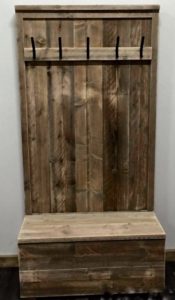
It takes me a few hours of sewing to fix it. I have already picked a nice private spot and a bed frame: a large standing hat-and-coat stand put flat, upside down on the floor with a drawer underneath on one end for support. Mattress on top and there’s my perfect bed! A tempat tidoer like I have not had in three months. Add the klamboe (mosquito netting) over it and I am all set.


Soerabaja, April 13, 1946

Ahh! I haven’t slept as well in weeks! No pain or stiffness because of the hard floor or planks. We always sleep on top of our blanket, naked, except for thin underpants. The food is good and we are being kept busy. I find a “bikin gigi” (dentist) in town after I lost a filling in a molar. The first one I find is not interested. The second one says “Filling no good, I will make crown, nice, gold crown”. After bargaining back and forth in broken English, I pay ten guilders, he takes a mold of my molar and tells me “You come back Saturday.”

Soerabaja, April 14, 1946

Today, for the first time after the beginning of the year, I attend a church service that is not only for oldiers. But the people attending are mostly soldiers anyway because few members of the congregation have returned to their homes yet. Walking home after church an Indo woman invites us in for a cup of coffee after we have investigated a shooting behind her house. The walk home takes us an hour and a half instead of just a half hour because we don’t know the way.

Soerabaja, April 19, 1946

Last night we were told that we have to get ready today, Good Friday, to leave. We have to do laundry and sorting, because we can only take a few things: two uniforms, toiletries, underwear, spoon, fork and knife, and most importantly, our weapons and ammunition. Gone are my wonderful mattress, my wonderful bed, our light and airy room.

Because I am last in line, only large uniforms remain and I hurry to find a toekang djait (tailor) to have two pants shortened and hemmed – they will be ready in the afternoon.
Just before 9 a.m. they announce that we can take a ride to church; Quickly I put on my jacket, grab my bible and revolver and am just in time for the ride in the pouring rain. After church I go back to the bikin gigi, although it is a day early, and after some drilling, adding a little cement, some pounding and doing some filing my tooth is fixed. I don’t have a lot of faith in his work, but for now the tooth is ok. Things at a bikin gigi here are quite different than at a Dutch dentist. The door is always open. The front room is waiting room, consulting room, family sitting room and playroom for his four young children. In the window hangs a display of gold-crowned dentures and dental tools. A large sign outside shows his name and Bikin Gigi. He has no office hours; you can walk in any time, and since there is no bell, if there is nobody in the room you just call. The wife then comes out and when she sees a white person she points at her mouth, and when you nod yes she calls her husband.

The final night in our beautiful barracks has passed. After a half hour’s drive we arrive in our new place. With ten of us (a platoon) we get one hut, without doors, without a back wall, without a floor; the wind can blow through it from all sides. But the roof is solid and the many geckos are our mosquito catchers. The rats only show up at night but they don’t bite although they are very noisy. In the afternoon we get good camp beds and have time to get organized. Our compound is surrounded by deserted, muddy sawahs, separated by small dykes. We are close to the coast and close to a kali (river). That is our border: we are not allowed to go beyond the kali across the two damaged bridges that are still passable. We bed down for a short night before entering enemy territory.


Stay tuned!

I welcome your comments

Ronny


Bersiap: The Bloody Independence War After WWII – Part 3

An eye-witness account by Gerrit Vermeulen, a young Dutch soldier from Renswoude
In his own words:

Nevasa, Semarang, March 28, 1946

This morning at 7:00 a.m. we anchor outside the harbor of Semarang. Part of the T Brigade disembarks on a landings craft. Around 2:30 p.m. we weigh anchor again and tomorrow afternoon we are scheduled to arrive in Soerabaja. The food we get here on board is ok, but it is so boring. It’s the same every day: cold, canned food, called emergency rations. For 6 people we get one box every day. In the box are fish, corned beef, meat and kidney pudding, cake, peas or carrots, pudding you can slice, rolled oats (which we can’t do anything with because we can’t cook), powdered milk, bacon, potatoes, sugar, matches, mepacrine tablets (against malaria), vitamin tablets, tea, chocolate, candy, cigarettes, salt and salt tablets and biscuits. All good quality, but we’d rather have a good meal. The salt tablets are not to add salt to your food but to just swallow, to replace the salt we lose through excessive perspiration because of the tropical temperatures; the salt we need to prevent cramps. I manage to get one of the few available hammocks to sleep in, hooked on the ceiling in the hold; it’s better than a place on deck, but it’s difficult to turn over.
I’m thinking about the imminent future: a dangerous time lies ahead, perhaps on the battlefield. I am not afraid of battle. In case I should die I know that my Redeemer lives! He fought the ultimate battle for me.

Nevasa, March 29, 1946

The native crew always walk barefoot. The British soldiers on board have shoes and uniforms like us. They are less stocky than the Dutch, but not as slender as the natives in Malaysia. They don’t use spoon and fork to eat, they mold the rice into a ball, dip it into the gravy and put it in their mouth. Some natives have long hair, down to their waist. They wear it in a bun on the very top of their heads and look like women from the back, until you see their full black beards and mustaches in the front!

Soerabaja, March 30, 1946

We embark at 7 a.m. and arrive in camp at 8:30 a.m. At 3 p.m. we are back in service. Glad to have escaped the muddy camp at Chaah airfield; glad to get off the dirty ship. But although Chaah was bad and the ship was worse, the camp is worst of all. I’d better not write about that any more. In the distance we hear gunshots again, the first after April 1945. But we don’t hear the screeching and hits of artillery shells – we’re too far away.

Soerabaja, March 31, 1946

Soerabaja seems to be safe, yet we are not allowed to into town unless we go with four or more and are heavily armed. We want to go to church this morning but can’t find the church in time, so we walk through town and are back home at 11:30 a.m.

Soerabaja, April 3, 1946

We started packing up yesterday and arrive in our new camp, a ways out of town. The barracks are in reasonably good condition, but the water supply, lighting and toilets are out of order.

The first night seems to last forever. We set out guard posts that change every two hours. Suddenly I hear gun shots. Immediately thereafter a bren rattles. I grab my loaded revolver and quickly load my gun. It is pitch dark outside and I can’t see anything through the window and door openings. There are no windows and doors in the building so I don’t have to open anything to look out. A few more shots are fired. Then silence. Later in the night we hear a few more shots while we are dozing. But in the morning we hear that one of our comrades in our battalion was shot through the middle of his head and died instantly. None of the attacking extremists has been killed or captured. “Were we actually attacked by extremists?” one man asks.
“Yes”, someone says.
“No”, someone else says, “we shot at each other.”
We need to set rules: Don’t shoot unless you are absolutely sure you are facing an enemy and are sure you can hit him.

Soerabaja, April 4, 1946

The second night in the barracks has passed. It lasted even longer and was more terrible than the first night. In one of the Psalms David says: My soul longs for God like a guard longs for the morning. I have stood guard before, in Holland, in England, in Malaysia. But not until now do I know how badly a guard can long for the morning. Here we feel the breaking of the dawn as a relief, a liberation.

We sleep here on hard boards, but are getting used to that. After 7:30 p.m. all lights have to be out and nobody except for the guard may go outside. We all go to bed early. I have no guard duty tonight. Suddenly, around 11:30 p.m., without any preceding shots whatsoever, fire from several automatic weapons very close by me rattles loudly and jolts me awake. I am suddenly scared to death. I jump up, grabbing my revolver and my gun. But what can we do here? Through the window and door openings we can’t see anything in the dark night except the flashes of firearms. Is there a friend or an enemy where we see the light? Should we fire in that direction or not? If we go there with our password the enemy will know immediately who we are. If we creep in that direction our comrades can take us for an enemy and shoot us down.

Slowly the firing gets less frequent, then stops. A moment later someone asks for bandages and a gurney. Through our building, passing me, five men are carried away. We are ordered to stay in our building. But to know that, so close by, our comrades are involved in a terrible fire fight, and having to helplessly stand by is almost as unbearable as being involved in a fight ourselves. We hear a few more shots and fire from an automatic weapon that night and can’t quite find the peace to go back to sleep.

The following morning we hear what has happened. The extremists, trained snipers, crept unseen through the posts of our camp until they were about thirty feet from the guard room, a building completely open on one side, where guards who were off duty rested in total darkness. They fired their automatic weapons, killing our Platoon’s Commander Lieutenant v.d.Werf and one other man, injured seven others, among which one critically, and three who will be invalids for the rest of their lives.

Today we are building scaffolds, making barbed wire barriers, installing booby traps and trip floors, leveling terrain, and so on. We have to stop things like the ones that happened in the past nights immediately.

This night is better. One man gets injured by accident. But several things are desperately bad. Food does not taste good, the kitchen is a stinky mess, there is no hot water to wash the mess kits; who does not get shot by the enemy could get sick of the filth: hygiene in the tropics!

Stay tuned!

I welcome your comments

Until next time,

Ronny

Bersiap: The Bloody Independence War after WWII – Part 2

An eye-witness account by Gerrit Vermeulen, a young Dutch soldier from Renswoude
In his own words:

Atlantic, January 26, 1946

Across from Portugal, January 27, 1946

Every day, forming a chain, we have to carry 40 bags of potatoes, heavy loads of flour, oatmeal, and more provisions from the hold to the kitchen upstairs. Today, after duty, I attend the church service.

Mediterranean, January 28, 1946

We passed Gibraltar during the night. I would have loved to see the Rock of Gibraltar, but that was not to be. We now see, in the distance, the coastline of Spain, and on the other side the coast of North Africa.

The first days on board were easy, but that is changing. We have roll calls three times a day, drills, Malay lessons, weapons theory and so on. It’s good to be kept busy – we have enough free time left.

Mediterranean, January 31, 1946

We have wonderful spring weather here on deck; because of Princess Beatrix’s birthday we get the afternoon off. This evening we see many lights in the distance: we are approaching Port Said. It was bedtime before we sailed into the harbor but we heard a lot of commotion around the ship with loading supplies.

Suez Canal, February 1, 1946

We wake up to discover our ship is slowly crossing the Suez Canal. There is a lot to see on both shores; the Egyptian side has palm trees, a road and a railroad, homes, lots of brown skinned Egyptians and groups of British soldiers.
Every ship traversing the Suez Canal needs to pay a fee depending on the size of the ship. Our ship needs to pay a toll of about fl 40.000, guilders that is, for one passage!

At dusk we arrive in Suez and go at anchor a couple of miles off shore. Alongside a huge tank boat refuels the ship with thousands of gallons of fuel oil, and on the other side two tank boats supply us with thousands of gallons of fresh water. Another boat hoists up thousands of kilos of meat, and people in several small boats offer merchandise in exchange for English money or cigarettes.

The merchants speak a little English, and when the deal is made they raise the merchandise in a net on a long stick and the money returns the same way. We call out to those Arab or Berber or black merchants, or whatever they may be ‘Hey, Ali Baba!’ and they all listen.

Today I received rations. Every soldier received 500 cigarettes, 24 chocolate bars, 8 bags of cookies, 8 1/2 oz cans of tobacco, 2 jars of shaving cream, 7 bars of soap, 36 razor blades, 2 tubes of toothpaste, 1 tube of hair cream, 6 boxes of matches and 2 cans of shoe polish. We received £2 pay, and the rations cost us 38 shillings, so I have 3 shillings left. I don’t know for how long this is.

In the afternoon we sail through the Red Sea. I reflect on the many battles that were fought here, the many wars that raged, going all the way back to Biblical times.

Arabian Sea, Indian Ocean, Sabang, February 2 -13, 1946

Today we pass Sabang, a small island in the Dutch East Indies at the northern tip of Sumatra. It looks like we will go on to Singapore first. Today we have to hand in our coats, overcoats and regular uniforms, plus two blankets; I still have my nice new beret. We haven’t received any mail yet.

Straits of Malacca, February 15, 1946

In the Straits of Malacca we are sailing at less than half the regular speed, as we did in the Suez Canal, because of the mine fields all around. Scary.

Singapore, Malaysia, Camp Cha’ah, February 16 – March 23, 1946

We spend the time training, marching through jungles and wading through muddy kalis (streams), sleeping in a makeshift hammock or on a hard coconut mat under a klamboe (mosquito netting). We have drills, church on Sundays, encounters with a large snake, huge spiders and stinging ants, sounds of monkeys high in the trees, lukewarm drinking water, sometimes rationed. The jungle is beautiful.

During one morning’s march the scouts hit upon an enemy patrol, which we defeat. Later on they tell us that there are more enemies up ahead and we should go straight at them, no matter the road situation. We are crossing a kali, march across dry terrain, through muddy marches, until we find the enemy. After an exchange of fire we march back to camp.

Nevasa, March 23, 1946

In the middle of the night we have to get up, pack, march for 2 1/1 hour, catch a train to Singapore, and board Nevasa, a large size British troop ship, which is by far not as well appointed as New Amsterdam. Without designated sleeping places, mostly on the hard floor, cold, canned emergency rations, poor bathroom accommodations and so on we are happy to know that it will be only for a few days.

Nevasa, Tandjong Priok, the harbor of Batavia, Java, March 26, 1946

We have arrived on Java, are waiting to sail on to Soerabaja, our final destination.

Stay tuned!

I welcome your comments

Until next time,

Ronny

Bersiap: The Bloody Independence War after WWII – Part 1

An eye-witness Account by Gerrit Vermeulen, a young Dutch soldier from Renswoude
In his own words:

An army of volunteers – I am one of them – is being trained in the Netherlands for deployment to the Dutch East Indies, which, on August 17, 1945 was declared The Republic of Indonesia by Dr. Ir. H. Sukarno. We will be sent to the Island of Java to restore peace and order.

Renswoude, December 1, 1945

My last day at home, last day in church with my congregation, farewell visits to friends and relatives before we depart, at first to Great Britain for two weeks, then to Egypt for three weeks, then to the Indies. Many people ask, “Why are you going there? You can get a decent job here, where all your friends and relatives live and your life will be easier and safer than as a soldier over there. Those natives have been dominated by the Dutch for hundreds of years and by the Japanese for four years, so let them have their freedom and create a republic of their own.”

Well, people, right now, this is the situation. In the Indies about 200,000 Europeans are still incarcerated in Japanese POW camps in dire circumstances with an enormous death toll due to illness and hunger. They must be liberated as soon as possible. Right after Japan’s capitulation nobody was able to do this. The remaining Japanese certainly don’t try to restore order and peace, no one is in command, there is no authority, and rebellious gangs, indoctrinated, incited and provided with weapons by the Japanese can freely roam the country, killing hundreds of thousands of innocent civilians. For the Netherlands to stay away now would be a crime, politically and economically, against all the Europeans and other peoples living there. So I am joining the army, ready to fight for justice and peace.

Zuidlaren, December 2 – 31, 1945 – Training

We are confined to the barracks for training. Daily roll call, standing guard, cleaning and polishing our gear, 6-mile marches, drills, shooting exercises with bayonets, brens, stens and the like.
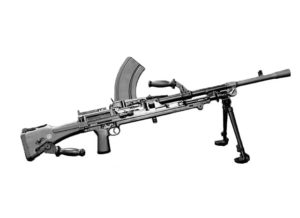
(The STEN was a family of British submachine guns used extensively throughout World War II and the Korean War. The simple design and very low production cost made them effective insurgency weapons for resistance groups)120px-smg_sten_mk_vi(The BREN (or Bren gun), was a light machine gun made by Britain in the 1930s and used in various roles until 1992)bren1We all have to learn Malay. Once or twice a week the lieutenant gives a language class and the rest of the time we have to study on our own. If I can study during work, I have more time at night for other work, like laundry, writing letters, darning socks and so on. We get vaccinated, once, twice, three times. It did not bother me. But on December 21, I am vaccinated against smallpox, and that affects me for the next two days with swollen lymph nodes and a fever.
The last day is spent getting ready for our move. Everything has to be spic and span; floors scrubbed, windows washed, walls behind cabinets cleaned, trash picked up, all our stuff packed in exactly the way we were instructed. We also learn English manners.

On January 1, 1946, we march off to the train station after inspection. At 6:30 p.m. the train is leaving; without heat, without lights, without windows, with freezing temperatures… a fine day to start the new year! Better not think about home, how wonderful it was each year to wish friends and relatives a very Happy New Year. Our long journey has begun.

East Hampstead Camp, January 4, 1946

The troop transport ship that takes us from Oostende, Belgium, to England has a capacity for 1000 men. Embarking a battalion is quite an operation. Every platoon, every squadron has to be taken to its designated place on board. We have to don life jackets the minute we get on board, because the ship will be crossing the Channel through mine fields and if we should get hit we won’t have time to find our life jackets before the ship is airborne! When we are all situated in our quarters and know the way there, we are allowed to go on deck.

We arrive at 6:00 p.m. in Tilbury harbor on the Thames, and disembark. I stand watch for two hours with 9 others, take the 10 o’clock train to arrive at the designated station at 1:00 a.m., and after a two-hour march arrive in camp. I tumble in my crib at 3:00 a.m., exhausted.

East Hampstead Camp is about 70 km (44 miles) from London. It is very different from Zuidlaren: a large terrain with tall trees and many barracks in groups of six, each with 15 – 20 men. There are toilet barracks here and there, kitchen barracks, cafeterias too, and it takes a good fifteen minutes to walk from one end of the terrain to the other. In the cafeterias we have to pay with English money, pennies, pounds, crowns, half crowns, sixpence, etc. which is not so easy to get used to at first. Cigarettes are available without coupons here, and there is plenty of tobacco, cigarette lighters, flashlights, fountain pens, delicious cake, fried fish, sewing materials and more things that are not available in the Netherlands since the war without coupons.

January 5 – 24, 1946

After roll call we all have to get our teeth checked; about 50 men were disqualified last month in Zuidlaren because of bad teeth. On a walk in the neighborhood I saw squirrels, many large black pigs, red-and-white cows, all different than back home. Along the roads you see large metal storage containers full of ammunition.

The barracks are sparsely furnished: cribs, but no chairs, table or benches; easy to clean, but very dark, with only two windows and one door, and an air vent high up on both sides. There is no central heating in the barracks so at night we sit around a stove – kind of cozy. The days are kind of easy here; we had to hand in our weapons for we will be getting new ones soon.

On January 15, we have to report to the field, all 1600 of us, for a visit of Prins Bernhard. He points out the importance of our duty to restore and keep order in the Indies, and mentions his expectations that many of us, after finishing our time in military duty, may stay to do important and necessary work in the Indies. He then sends us off with God’s blessings and suggests three hoorays for our beloved Queen Wilhelmina.

The tropical outfits we received consist of 3 uniforms, 2 with long pants and 1 with shorts, underwear, coats, a large backpack and a kit bag, all designed for the tropics. Then a new sweater, shirts, 1 pair of new boots and 1 pair of sneakers.

January 25, 1946

Finally, the moment to leave Europe has arrived. At 4:00 a.m. we march off, heavily loaded, including weapons. Then on the train to Southampton, where the New Amsterdam, Netherlands’ largest passenger vessel, awaits us at the station to depart at exactly 2:00 p.m., after we don life jackets again. After a little while, even the last glimpse of the coast disappears from sight and there is only water, water and water.

Stay tuned!

I welcome your comments.

Ronny